Enterprise story
NourishPHX helps solve the issue of food insecurity in The City of Phoenix which currently has 43 food deserts
By Andi Ruiz
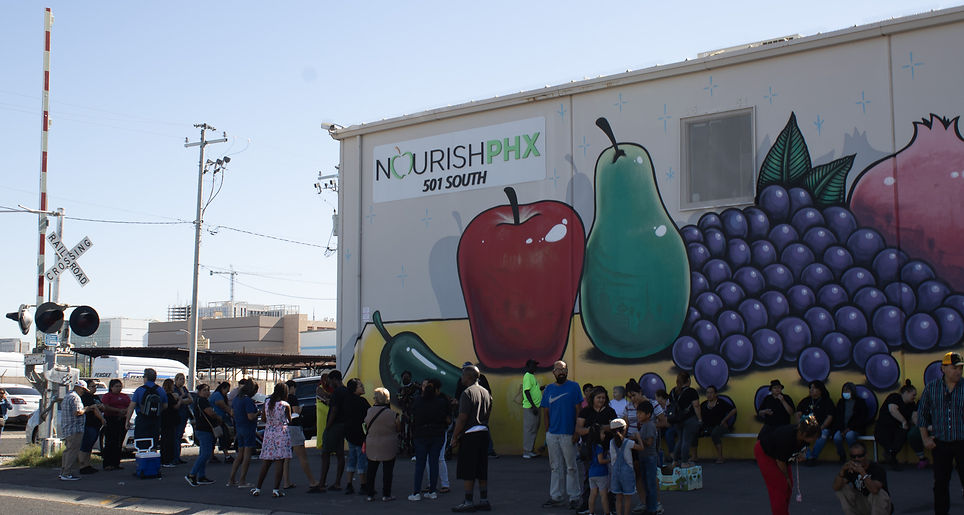
The line out front of NourishPHX for food and clothing assitance. Andi Ruiz 4.16.25
Parts of the Phoenix community contribute to solving the issue of food insecurity and bringing fresh and healthy food to those in need.
NourishPHX is a non-profit food and clothing bank serving vulnerable individuals and families to help get them on the road to self sufficiency.
Program Director Kat Betsy said food insecurity affects multiple communities across the valley.
“Just in general, people just aren't making enough money and hunger really doesn't have anything to do with food, it has to do with income,” Betsy said.
Even with many non-profit organizations aiding the issue of food insecurity, they are not doing enough to fix it but “putting a Band-Aid on the problem,” Betsy said.
“Whereas we kind of need to do surgery and go under the skin and understand the root causes of these things,” Betsy said. “As individual organizations, we can only do so much.”
Betsy said she feels fulfilled working on the front lines helping people combat this struggle in their lives as “you can't put a price tag on that,” Betsy said.

The assembly line inside of NourishPHX with volunteers preparing boxes and filling carts. Andi Ruiz 4.16.25
An anonymous patron at the food bank said she is grateful for the work that NourishPHX has done for her from putting clothes on her back to food on her table.
NourishPHX is a non-profit food and clothing bank that helps those in need and are vulnerable to get back on their feet through various services and programs.
Jose-Benito Rosales Chavez, an assistant professor at ASU's School of Geographical Sciences and Urban Planning specializes in relevant food resources and food environment in Phoenix with an emphasis on community development.
Chavez said food insecurity is not only access to food but also having food resources in high diversity communities that are relevant to their diet and needs.
“When you consider the smaller grocery stores and the smaller ethnic grocery stores, the things that we had to consider is to be able to show how many there are,” Chavez said.
Half of the Phoenix population lives in areas that do not have an affordable grocery store within a 1 mile radius.
Forty-three of these neighborhoods considered food deserts have residents who struggle to access nutritious and affordable food without the need of transportation.
Marhely Gastelum Vidal who has lived in Central Phoenix her entire life said, “It’s not great obviously because it’s groceries, it's just not convenient as the nearest grocery store is 15 minutes away and my mom has to go almost every week.”
“There haven't been many changes that I've seen in my lifetime,” Vidal said. “You basically see the same grocery stores and brands, and it doesn't look like prices are going down anytime soon.”
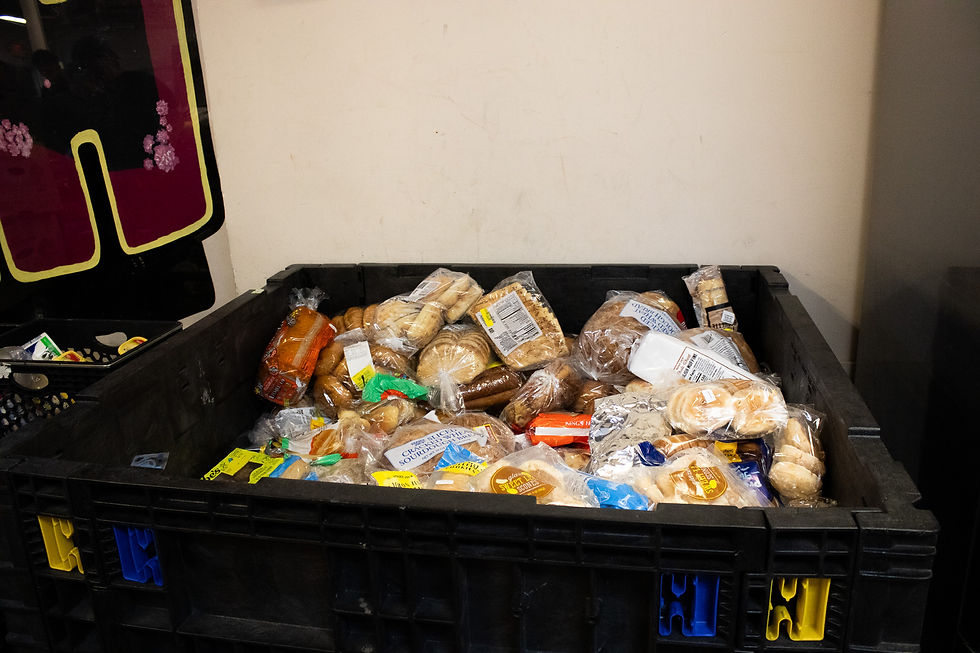
Shipping container full of bread at the Nourish food bank ready to give pass out and but into boxes. Andi Ruiz 4.16.25

Carts filled with water and snacks for people waiting in line to receive their food and clothing card. Andi Ruiz 4.16.25
Shipping container full of bread at the Nourish food bank ready to give pass out and but into boxes. Andi Ruiz 4.16.25
He said it becomes much of a challenge when those grocery stores are not walkable from residents' homes and they are unable to buy the foods relevant to their preferences and culture.
Chavez said, “If it's too hot and they don't have a car, then they're probably not going to be able to access the grocery store.”
Chavez said the city can incorporate different sustainable solutions to implement a variety of food sources like mixed-use infrastructure and farmers markets.
Although, he said with The City of Phoenix’s strict zoning laws and use ordinances that regulate what parts of the city can be residential or commercial, mixed-use infrastructure like supermarkets below residential communities in urban settings are difficult to implement.
The City of Phoenix itself has created its own programs from providing opportunities to low-income communities to grow their own food in their backyard and connecting farmers markets to these food deserts.
City of Phoenix’s Food System Program Manager Maddie Mercer said, “Many of the programs focus on improving people's direct access to food by helping our food banks and food pantries increase the amount of food that they could provide.”
“A mile might not sound very far, but if it’s 120 degrees in the summer here in Phoenix and you don’t have access to a private vehicle and you're relying on public transportation or you’re walking that can be a significant barrier,” Mercer said.
Mercer said The City of Phoenix is guided by their food action plan that is outlining strategies and specific actions that incorporate community partners to "increase the access to healthy affordable food.”
Mercer said, "People might think just throwing away a sandwich or an apple might just be nothing, but it means a lot for the people who are not able to access it.”